
H2 Heading Title Goes Here
Donec leo nisi, efficitur et risus vitae, faucibus euismod velit. Aliquam a aliquet lorem. Curabitur dapibus varius metus, sed blandit augue aliquam sed. Cras iaculis pretium tempus. Aliquam cursus, neque sit amet interdum ullamcorper, diam ante fringilla tortor, sit amet tristique dui tellus et diam. Aliquam laoreet vitae neque eu semper. Morbi id aliquet nunc. Suspendisse sapien dui, sagittis vitae augue non, posuere convallis arcu. Nulla commodo nibh eget erat luctus, nec varius enim finibus. Suspendisse dui justo, lobortis vel placerat vel, mattis et mi. Sed id tristique nisl.
Current Weather & Tools
What weather conditions are causing the upcoming freeze event?
A strong pressure gradient between a high pressure system over Louisiana and a departing low pressure system in the Atlantic is funneling cold northern air deep into Florida. This setup can create:
- Very low temperatures across most of the state
- Significant winds (20–30 mph sustained, with gusts 35–45 mph)
- A 20–30% chance of gusts reaching 50+ mph
This combination of cold air and wind increases freeze risk for citrus growers.
What temperatures should growers expect during this event?
As of the afternoon of January 29th, forecast models (Euro/ECMWF and GFS) had been consistently showing:
- 22–25 °F across inland parts of Marion, Lake, and surrounding counties
- 25–28 °F as far south as Sebring
- Temperatures may reach 21–22 °F in some areas
Both models agree closely, signaling strong forecast confidence, though short-range models will become available on January 30th and increase forecast accuracy.
Why is wind such an important factor in freeze events?
High winds complicate freeze protection because they:
- Increase evaporative cooling
- Reduce the effectiveness of microsprinkler freeze protection
- Increase the risk of tissue injury even when air temperatures are borderline
Wind behavior is also difficult to predict, making freeze management more challenging.
What weather tools can growers use to monitor conditions in real time?
UF/IFAS offers several useful tools through the FAWN (Florida Automated Weather Network) website:
Cold Protection Toolkit
Includes tools for:
- Minimum temperature estimates
- Dew point–based temperature predictions
- Radiation freeze modeling
- Irrigation risk estimates
- Irrigation cutoff temperature recommendations
Because FAWN tools occasionally malfunction during peak usage, growers should:
- Refresh the page, close and reopen their web browser, or switch stations
- Monitor updates from UF/IFAS agents
- Use multiple data sources when making decisions
How does the FAWN “Irrigation Risk” tool help?
This tool evaluates:
- Air temperature
- Wetbulb temperature
- Maximum wind speeds
It determines whether running freeze protection irrigation will be beneficial or hazardous.
For this event, risk is expected to be severe or extreme all Saturday night due to:
- Very low dew points (as low as 9–10 °F)
- Strong winds
What is the purpose of the wet bulb temperature information in FAWN?
Wet bulb temperature indicates how cold plant surfaces may become due to evaporation. It is essential for freeze protection decisions because:
- Freeze injury risk increases when wet bulb temperature drops below critical tissue thresholds
- Irrigation decisions should be based on wet bulb, not just air temperature
FAWN provides real-time wet bulb estimates for each station.
What is the FAWN “Irrigation Cutoff Temperature” tool?
This tool helps growers determine when it is safe to turn irrigation off after a freeze event.
While a wet bulb of 33 °F or higher is normally safe, wind can alter this threshold.
Growers are encouraged to follow this tool closely—especially during multi-night freeze events.
What will be the affected on bloom and is there anything growers can do to help the upcoming bloom?
Early Flowers Are Likely to Burn Off
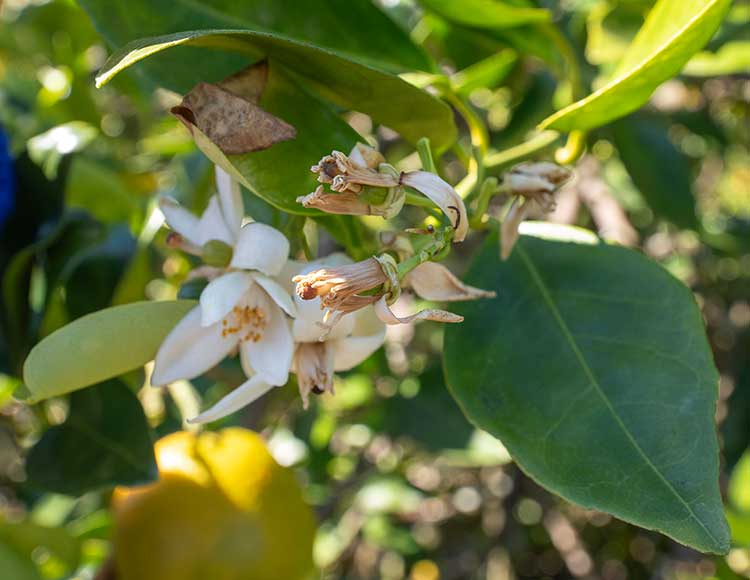
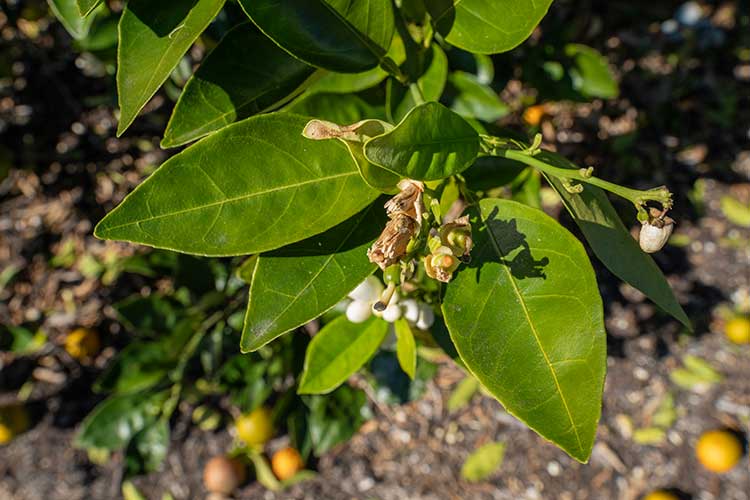
- Flowers that bloom before or during a cold event are highly sensitive.
- Recent low temperatures (such as those around New Year’s) have already caused burning of flowers and leaves.
- Most early flowers will not survive long enough to set fruit.
- Depending on the severity of freeze damage, loss of early flowers is not necessarily harmful
- These early flowers typically produce poor‑quality fruit.
- Losing them can actually be beneficial because:
- Early freeze damage helps synchronize the main bloom depending on how well the leaves and budwood was acclimated.
- A uniform bloom period can lead to better fruit set and management.
Main Bloom Still Expected
- Despite early flower loss, a strong main bloom is anticipated on mature trees that have been acclimated to cold temperatures this week. Growers should expect peak bloom in the first week of March.
What if your trees have too few flowers?
If freeze damage results in insufficient flowering, growers can support fruit set by:
Applying Gibberellic Acid (GA)
- A GA spray can improve:
- Fruit set
- Fruit retention
- Young fruitlet development
- Timing is critical—applications are recommended when the grove reaches approximately 80% open bloom.
Follow Flower Bud Advisories
- Updated advisories will provide bloom progress observations and optimal timing for GA applications.
- Growers should monitor advisories closely as bloom development will be tracked in the field.
What effects should growers look for in fruit quality and shelf life following a freeze?
Ice Formation During the Freeze
- Observing ice forming on the fruit during the night can give an early indication of potential damage.
- This helps growers anticipate the severity of injury before daylight assessments.
Visible Field Damage After the Freeze
- Severe freezes may show some external damage right away.
- However, not all freeze injury is immediately apparent on the surface.
Internal Tissue Damage
- Internal freeze injury often takes about four weeks to fully see the impact.
- During this period, damaged internal tissues dry out enough to allow density separation tests to grade fruit and identify freeze‑affected fruit.
- Waiting this period—when possible—improves accuracy in sorting and grading.
Fruit Drop
- Severely damaged fruit is likely to drop naturally in about 2-4 weeks.
- Allowing this drop before harvesting can help remove the worst‑affected fruit from the crop.
Reduced Shelf Life
- Freeze‑injured peel degrades more quickly.
- Damaged or compromised rind tissue is more prone to decay, breakdown, and rapid deterioration. This leads to a significantly shorter shelf life.
Off‑Flavor Development
- Fruit with internal freeze injury can develop off‑flavors, especially in cases of severe damage.
- These flavor issues can impact both fresh market quality and consumer acceptance.
Marketing Considerations
- Because damage may not be fully visible right away, growers are encouraged to target local markets after a freeze event.
- Local sales help move fruit more quickly when shelf life may be shorter.
Is there any benefit to running irrigation the day before a freeze to warm the soil?
Limited Benefit With Modern Microjet Irrigation
- Earlier studies showing benefits from irrigating the day before a freeze were conducted when overhead irrigation was widely used.
- Overhead systems saturated row middles, allowing sunlight to warm the exposed soil during the day, which increased heat retention overnight.
- With today’s microjet irrigation, water is applied under the canopy near the trunk, where sunlight cannot effectively warm the wetted soil.
- As a result, current research does not show strong benefits from saturating the ground the day before a freeze.
Not Harmful, but Not Particularly Helpful
- While irrigating the day before is not likely to damage trees, it also does not provide the freeze‑protection benefit it once did with older irrigation methods.
- The protective effect comes more from timing irrigation during the freeze rather than the day before.
Irrigation for Freeze Protection Also Counts Toward Daily Irrigation Needs
- Running irrigation overnight for freeze protection provides sufficient water for the next day.
- There is no need to irrigate again during the day after freeze‑protection irrigation.
Summary
- Pre‑freeze daytime irrigation offers little benefit under modern microjet systems.
- Irrigation should be timed with the freeze, beginning around 36–37 °F and running through the night.
- Overnight freeze‑protection irrigation doubles as daily irrigation, eliminating the need for an additional irrigation cycle the following day.
Should you run irrigation during a freeze, and what factors determine whether it will actually protect the trees?
Wet Bulb Temperature Is the Critical Factor
- Wet bulb temperature reflects how cold plant surfaces can actually get under the combined effects of wind, evaporation, and humidity.
- When air has very low dewpoints and high winds, the wet bulb temperature can drop 5–6° F below the air temperature.
- This means that even if the air temperature is forecasted to be 23° F, the plant surface could cool to around 17° F—far more damaging.
High Winds Make Freeze Protection Risky
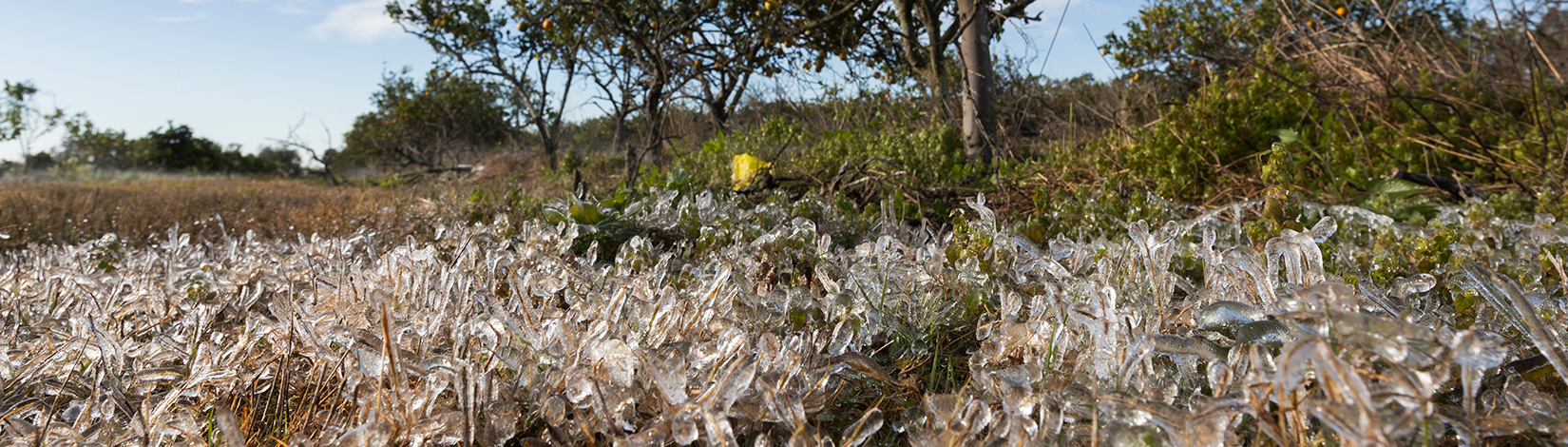
- In high‑wind events, irrigation may not create enough protective ice to keep tissues at 32 °F.
- Wind introduces air into the forming ice, creating cloudy, less‑protective ice that releases less heat.
- Under these conditions, running irrigation can actually expose the tree to colder effective temperatures than not running it at all.
Conditions Are Very Different Between Wind and Radiation Freezes
- Night 1, January 31st, 2026 (Wind Freeze):
- Strong winds reduce the effectiveness of irrigation.
- Many growers choose not to run irrigation because the risk of lowering tissue temperature is high.
- There are growers who grew through the 1980’s freezes who believe running the irrigation helped. With today's sparser canopies and differences in plant spacing, as well as the potential for 30+mph winds, it is unknown if this storm will behave the same at the in-grove level and if this outcome is repeatable.
- Night 2, February 1st, 2026 (Radiation Freeze):
- Winds often die down.
- If temperatures are forecasted in the mid‑20s, irrigation becomes a much more viable freeze‑protection strategy.
Tree Age and Size Matter
Different age trees have different critical temperatures:
Mature Trees
- Acclimated mature trees may tolerate temperatures as low as 22 °F before leaf‑kill begins.
- Some growers may choose not to run irrigation on mature trees unless temperatures are expected to fall into the low 20s or teens.
Young Trees or Resets
- Young trees may be damaged at around 28 °F.
- If temperatures are predicted to drop below this level, irrigation may provide benefit, but only if enough water can be applied to maintain protective ice.
System Capacity Determines Whether Protection Is Possible
- Effective freeze protection requires high‑volume microjets capable of generating continuous ice.
- Systems with 360° patterns and blue, green, or red emitters are better suited for freeze protection.
- Lower‑output systems may not apply enough water, making irrigation risky rather than helpful.
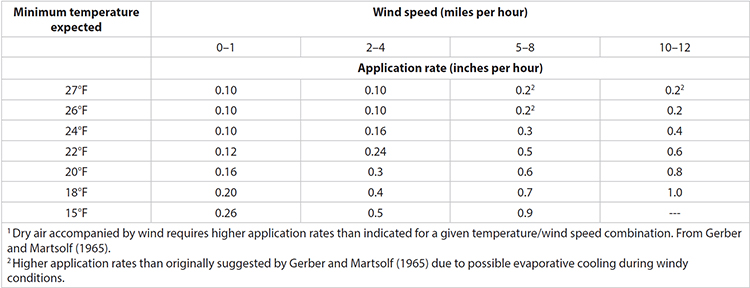
- The following table from EDIS Publication #HS968 gives recommended minimum water application rates for freeze protection based on air temperature and wind speed:
Irrigation Decisions Should Consider Both Weather and Equipment Limits
- If the system cannot provide adequate water, or if winds are too strong, irrigation may cause more harm than good.
- If conditions are calm, temperatures are moderate, and the system has sufficient output, irrigation can offer meaningful protection—especially for young trees.
Summary
- Wet bulb temperature, not just air temperature, determines freeze‑protection success.
- High winds can make irrigation ineffective or dangerous.
- Young trees benefit more from irrigation than mature trees.
- System capacity matters—you must be able to make enough ice.
- In wind events, irrigation is a gamble; in calm radiation freezes, it is much more effective.
When should you turn off irrigation during a freeze event?
Do NOT turn off irrigation until all ice has completely melted
- Microjet irrigation should remain running until the ice formed on the trees has fully melted. Growers with field experience report that stopping irrigation too soon can expose ice‑covered leaves and branches to wind, worsening freeze injury. Continuous operation helps maintain the protective ice‑formation process.
- In many cases, this may not occur until 10 or 11 a.m. or even later, depending on the weather.
Why? Turning off irrigation too early can increase freeze damage
- When irrigation stops, the protective ice loses heat immediately.
- The melting ice can cause the temperature of plant tissues—especially young trees—to drop rapidly, leading to greater injury than if irrigation had stayed on.
- Continuous water application provides a steady release of heat as ice forms; shutting off the system interrupts this process.
Key Takeaway
- Keep irrigation running through the freeze and into the morning
- Do not shut off the system until all ice has melted naturally
- Turning it off too early puts trees—particularly young ones—at higher risk of freeze injury
What should growers consider when using IPCs during a freeze, and where should irrigation emitters be placed?
IPCs Tend to Maintain Warmer Air Inside
- Although long-term data is still being collected, observations show that air inside IPCs is warmer than outside during freeze events.
- IPCs also help reduce wind exposure, which can protect young trees and reduce evaporative cooling.
“Igloo Effect” May Improve Freeze Protection
- When the surface of the IPC becomes wet before freezing (such as when irrigation is running), a protective layer of ice can form.
- This ice layer can trap heat, creating an “igloo effect” where the air inside the IPC remains around 39 °F.
- This effect has been observed by researchers and colleagues in states like Georgia, where IPCs are also used.
Place Irrigation Emitters Inside the IPC
- For effective freeze protection, emitters should be placed inside the IPC.
- The water stream should be positioned above the graft union to protect the most vulnerable part of young trees.
- While running irrigation outside the cover may offer some benefit, it is not as effective as placing emitters inside.
Keep IPCs Open at the Bottom
- IPCs should remain open at the bottom to allow:
- Airflow
- Proper irrigation spray coverage
- Preventing excessive humidity buildup
- If high winds are expected (e.g., gusts approaching 50 mph), the cover can be staked or pinned to the ground, but not fully sealed—it still needs to stay open enough for irrigation and air movement.
Continue Irrigation After the Freeze Until All Ice Has Melted
This point is critical:
- Do not stop irrigation immediately after temperatures rise.
- Continue running irrigation until all ice has melted inside and around the IPC.
- Stopping too early can result in supercooling, which may damage tissues that were previously protected by ice.
Summary Guidance
- Preferably, emitters inside the IPC
- Jet directed above the graft union
- IPC bottom left open, but can be staked for stability
- Expect a beneficial igloo effect when irrigation is running
- Continue irrigation until all ice is gone
What is the best microjet placement when protecting young trees, especially those with IPCs?
Position the Microjet a Few Inches Above the Graft Union
- The microjet should be placed just a few inches above the graft union, which is the most vulnerable part of the young tree.
- This placement helps ensure the graft union receives adequate heat from the forming ice layer during a freeze event.
Use Multiple Stakes or Supports to Keep IPCs Open
- Growers often use mulch nails or long stakes on three sides to keep the IPC open and properly positioned around the tree.
- Keeping the bottom of the cover open is important to:
- Allow proper spray coverage
- Prevent excessive humidity buildup
- Maintain airflow
Higher‑Pressure Emitters Perform Better
- Field observations show that microjets operating at higher pressures (approximately 12 gallons per hour or more) provide better freeze protection.
- Trees protected by high‑pressure emitters exhibit:
- More consistent ice formation
- Better temperature buffering inside the IPC
- Less freeze injury overall
- Low‑pressure emitters, even when properly placed, resulted in significant damage during freeze events.
Summary of Best Practices
- Place the microjet inside the IPC
- Aim the spray a few inches above the graft union
- Support the IPC with stakes to keep it open
- Use higher‑flow emitters (12+ GPH) when possible
- Monitor performance closely during freeze conditions
Are there any specific recommendations for protecting CUPS (Citrus Under Protective Screen) during a freeze?
CUPS Temperatures at Night Are the Same as Outdoors
- Years of data show that nighttime minimum temperatures inside CUPS match outdoor temperatures.
- CUPS structures do not keep trees warmer during a freeze.
- In rare cases, temperatures inside CUPS may be 0.5–1°F colder than outside.
- This is partly because:
- Sunrise (direct light on trees and ground) occurs later inside a screened structure
- Likewise, Sunset occurs earlier, limiting heat accumulation
Wind Speeds Are Much Lower Inside CUPS
- CUPS significantly reduces wind velocity, which is beneficial in windy freeze events.
- Lower wind means:
- Less evaporative cooling
- More stable microclimates
- Better performance of microsprinklers
- Higher dewpoint temperatures (humidity) inside CUPS also reduces evaporative cooling.
Microsprinklers Inside CUPS Provide Effective Freeze Protection
- Most CUPS systems use under‑tree microsprinklers, which are fully capable of freeze protection just like outdoor groves.
- Reduced wind and higher humidity inside CUPS often make sprinklers more effective indoors than outdoors.
Ice Formation Inside CUPS Is Typically Less Damaging
- Ice may still form when sprinklers run, but because wind is minimal:
- Ice tends to insulate rather than injure
- Ice loads are more stable
- Growers have observed less need to run sprinklers inside CUPS, but protection is still recommended in severe freezes.
Recommendation for Upcoming Freeze Events
- If forecasts predict severe cold — such as the expected conditions on Sunday and possibly Monday — growers are advised:
- If you have water available, run your irrigation system.
- Even though conditions may be slightly milder inside CUPS, the risk of freeze injury remains identical to outdoor trees.
Summary
- Nighttime temperatures inside CUPS = outdoor temperatures
- Sometimes slightly colder (0.5–1°F)
- Wind speeds greatly reduced (big advantage during windy freezes)
- Higher humidity reduces evaporative cooling
- Microsprinklers work as well or better than outdoors
- If severe cold is predicted, run irrigation for freeze protection
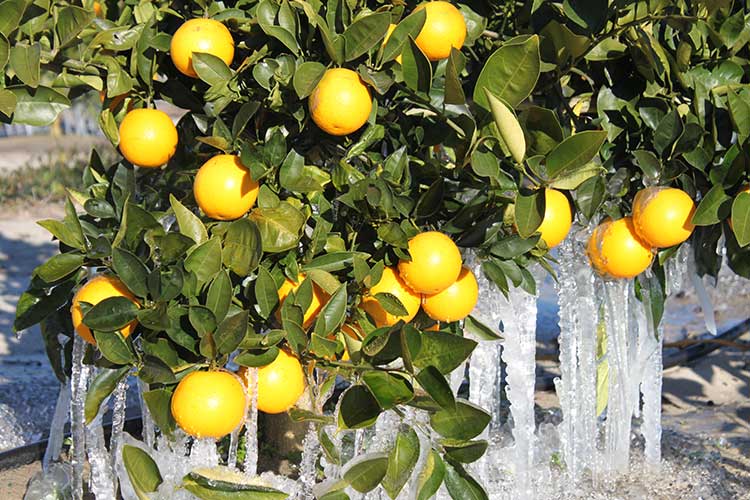
Should you run irrigation during a freeze even when the air is very dry and the dew point is low?
Low Dew Points Increase Evaporative Cooling
- Very dry air causes faster evaporation, which leads to greater evaporative cooling.
- This can push plant surface temperatures even lower than the air temperature, increasing the risk of freeze injury.
CUPS Environments Reduce Some of That Risk
In Citrus Under Protective Screen (CUPS) systems:
- Humidity is higher than outside due to the partially enclosed structure.
- Higher humidity means a higher dew point, reducing evaporative cooling.
- Wind speed inside CUPS is much lower, also lowering evaporative‑cooling risk.
This makes irrigation‑based freeze protection more effective and less risky inside CUPS compared to open groves.
You Must Turn Irrigation On Before Temperatures Reach 32 °F
- Decisions should be made well before freezing temperatures arrive.
- Irrigation needs to be running when temperatures are still above 32 °F, several degrees higher.
- Starting too late—after temperatures hit freezing—can run the risk of the pipes and emitters freezing and becoming inoperative.
Forecasts Strongly Suggest Irrigation Will Be Necessary
- Based on long‑term field experience, when forecasts show temperatures dropping into the mid‑20s, irrigation will almost certainly be needed.
- Even if dew points are low, the freeze risk is high enough that running water remains the recommended protection strategy.
Summary
- Low dew points increase evaporative cooling and freeze risk
- Inside CUPS, higher humidity and lower wind reduce that risk
- Begin irrigation before temperatures approach freezing
- With mid‑20s forecast, freeze protection irrigation is strongly recommended
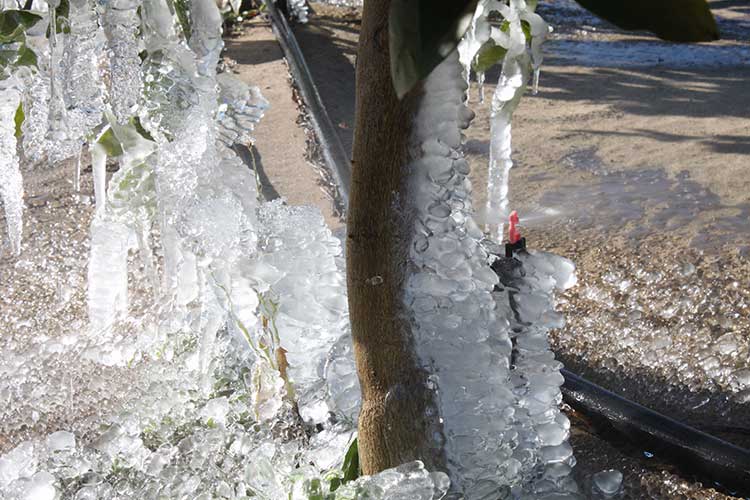
Can spraying water on the CUPS (Citrus Under Protective Screen) roof at around 28-30 °F help by creating a thin layer of ice?
Yes—Creating a Thin Ice Layer May Provide Benefits in Dry, Radiation‑Freeze Conditions
- In a dry freeze (very low humidity, little to no natural ice accumulation), lightly wetting the CUPS roof to form a thin ice layer could help create a temporary insulating barrier.
- This ice layer may function somewhat like low clouds, reflecting radiant heat back toward the grove and reducing heat loss.
- The concept has been used successfully in ferneries with shade‑cloth structures, where growers wet the cloth to create a protective ice layer.
This Technique Has Not Been Scientifically Tested in CUPS Systems
- Experts note that no formal studies have evaluated this strategy specifically for CUPS structures.
- While anecdotal evidence from other protected‑shade systems is promising, CUPS structures differ in:
- Structural strength
- Larger size of CUPS (>10 acres), makes the spraying of the entire roof in a short time impractical
- Type of screen
- Wind‑load capacity
- Weight‑bearing design
- More research is needed to confirm both effectiveness and safety.
Structural Load Is the Key Concern
- Wetting the top screen can add significant weight, especially if more water or ice accumulates than expected.
- Ferneries are often engineered to support heavier loads, but CUPS structures may not be rated the same way.
- Because of this, growers should be cautious about:
- Excess ice buildup
- Combined effects of ice + wind load
- Risk of structural sagging or damage
Since the walls of a CUPS are not the major load-bearing structures (the internal poles are), it should be safe to use the same technique to build ice on the screen walls and create a windbreak effect.
- Experts recommend that this water spraying be conducted by driving the tractor sprayer along the walls on the inside, away from the external anchor cables attached to the walls.
- The benefits of the iced walls are mainly as temporary windbreaks and do not prevent loss of radiant heat out of the CUPS.
- Recommended temperature for creating ice on the walls with a sprayer: 28F; lower if there is significant wind.
Summary
- Lightly icing the CUPS screen might add protection in dry, calm, radiation freezes.
- The idea has worked in shade‑cloth ferneries, but not tested in CUPS.
- Structural limits of CUPS roofs must be considered.
- If attempted, water should be applied to the top of the screen only.
- Use caution—benefits remain speculative, and risks vary by structure.
What are the physiological effects of freezing on mature trees, and how can I identify them in the field?
Leaf Damage
- Leaves may look scorched or burned.
- Leaf can appear water-soaked or mushy because freezing causes cells to expand and rupture.
- This is often the earliest visible sign of freeze injury.
Drop of New Growth
- Young shoots, flowers, and developing fruit are highly sensitive to cold.
- These tender tissues may freeze, turn dark, and drop shortly afterward.
- Expect a significant drop in buds, flowers, new leaves, and small fruit following a freezing event.
Leaf Drop After Freeze Is Not Always a Bad Sign
- In cold-tolerant varieties, leaf drop is a protective mechanism, not necessarily an indicator of stem death.
- If leaves drop but stems remain green and attached, do not prune—the tree may recover.
- Premature pruning can cause additional stress.
Bark Splitting on Susceptible Varieties
- Some varieties, such as certain grapefruit types, are genetically more prone to freeze injury.
- You may observe splitting on the bark of trunks or major branches.
- This damage is related to varietal sensitivity and cannot be fully avoided.
Increased Risk of Secondary Pathogens
- Freezing damage creates entry points for fungal infections.
- Check for high humidity or moisture conditions that may support pathogen development.
- Applying an appropriate fungicide after freeze events may help prevent secondary issues, depending on the situation.
Not a “One Size Fits All” Scenario
- Freeze symptoms and severity vary by variety, location, and tree condition.
What can growers do after a freeze to help trees recover and prevent additional stress?
Wait Before Taking Action
- Do not immediately irrigate or fertilize after a freeze.
- Trees are already under significant stress, and forcing new growth too soon can worsen the damage.
- Because it is still mid‑winter, additional cold events are possible. Encouraging new flush now makes trees more vulnerable.
Avoid Stimulating New Flush
- Water and fertilizer applied too soon will push tender new growth.
- Early flush can be severely harmed if another cold event occurs.
- Delaying irrigation and fertilizer allows the tree to stabilize and prevents premature growth.
Resume Regular Irrigation Only After Warmer Weather
- Wait until temperatures warm up and you can clearly see how the tree is responding.
- Once conditions improve, resume normal irrigation practices gradually.
Adjust Fertilization Based on Damage
- After assessing canopy loss or twig dieback, you may need to reduce fertilization rates.
- This adjustment is typically considered when planning February fertilization (late February to early March).
Document and Assess Damage
- Take before‑and‑after photos to help track changes and evaluate injury severity.
- A clear assessment helps guide decisions about irrigation, nutrition, and long‑term recovery.
Don’t Add Stress to an Already‑Stressed Tree
- Trees recovering from freeze injury need stability, not stimulation.
- Avoiding immediate irrigation and fertilization helps prevent additional stress that could delay recovery.
What is the recommended timing for resuming fertilization after a freeze event?
Wait for Sustained Warm Weather
- Do not fertilize until temperatures stabilize and the risk of additional cold fronts or polar vortex events has passed.
- Growers should monitor weather patterns through mid‑February, as cold events are still possible.
Typical Timing: Late February to Early March
- Most experts recommend waiting until late February or the beginning of March before resuming fertilization.
- This timing aligns with gradually warming temperatures and reduced freeze risk.
Fertilizing Too Early Provides No Benefit
- During freezing temperatures, roots enter a dormant or semi‑dormant state.
- Dormant roots cannot effectively absorb nutrients, making early fertilization wasteful.
- Applying fertilizer too soon may stimulate tender new flush, increasing vulnerability to additional freezes.
Resume Fertilization When Temperatures Reach the 60s–70s °F
- Safe fertilization typically begins when daily temperatures consistently reach:
- Low to upper 60s °F
- Mid‑70s °F
- These temperatures also coincide with the natural bloom period for many citrus varieties, supporting early fruit development.
Fertilization Around Bloom Timing
- Once flowering begins (e.g., Hamlin first, Valencia later), fertilization can safely resume.
- Warmer temperatures plus active bloom ensure trees can use applied nutrients effectively.
Should growers prune trees after a freeze, or should they wait? How do you decide what and when to prune?
Wait Before Pruning
- Do not prune immediately after a freeze.
- Even under normal conditions, pruning is recommended after all freeze threats have passed, typically at the end of February.
- However, in the case of a significant freeze event, waiting even longer is necessary.
Allow Dieback to Run Its Course
- Freeze damage causes dieback on affected limbs.
- Dieback progresses gradually—sometimes over weeks or even months.
- Growers should wait until dieback has completely stopped before making pruning cuts.
Best Timing: Late Spring to Early Summer
- The ideal time to prune after a major freeze is mid‑May through early June.
- By this time, the tree becomes metabolically active, making it easier to identify the boundary between dead and living wood.
How to Identify Where to Prune
- Look for limbs with dead upper sections and living tissue below.
- You will often see a visible transition point:
- Above: dry, brown, dead wood
- Below: green, living tissue
- Make pruning cuts about ½ inch to 1 cm below the dead‑to‑live transition—this is the “sweet spot” for proper healing.
Severe Freeze Damage May Require More Than Pruning
- In extreme cases, freezes can damage trees down to the rootstock union.
- If the damage extends below the graft union:
- Re‑grafting with new scions may be necessary.
- This is more common in the northern regions following severe freezes.
Summary Recommendation
- Do not prune in winter.
- Wait until late spring or early summer to evaluate the full extent of damage.
- Prune only after you are sure where the dieback ends and healthy tissue begins.
Is HLB (Huanglongbing) going to be an important factor in how much freeze damage occurs?
HLB‑Affected Trees Often Have Thinner Canopies
- Trees with HLB typically have reduced canopy density and less leaf mass.
- A thinner canopy provides less insulation, increasing vulnerability to cold exposure.
- Without substantial canopy mass, trees lose heat more rapidly during freeze conditions.
Growing Conditions Add More Variability
- The level of HLB infection, recent growth patterns, tree vigor, and nutritional status all influence how a tree responds to cold stress.
- Because grove conditions differ widely, freeze outcomes can vary tree‑to‑tree and grove‑to‑grove.
Multiple Freeze Events Create Additional Uncertainty
- When trees experience several nights of different freeze types (e.g., wind freeze followed by radiation freeze), predicting damage becomes even more complex.
- The combination of HLB stress + multiple freeze events introduces many unknowns, making damage difficult to forecast.
Some Trees May Recover Better Than Expected
- Despite HLB and freeze exposure, many trees demonstrate resilience.
- Past observations show that trees can sometimes heal and recover even after multiple freeze events.
What should growers be documenting right now for insurance or disaster‑relief purposes?
Stay in Contact With Your Local Crop Insurance Agent
- Each insurer may require specific documentation, sometimes even before a freeze event occurs.
- Have current yield estimates ready, along with data from previous years to show production trends.
Take Photos and Videos Before the Freeze
Insurance adjusters and disaster assistance programs want clear before-and-after comparisons. Document:
- Swollen buds
- Bloom clusters
- Fruit present on trees
- Overall grove conditions
- Any areas likely to be impacted
High‑quality photos and short videos taken this week (before the freeze) will be extremely valuable.
Document More Than Just the Trees
Freeze events can also damage infrastructure. Before the storm, record:
- Irrigation systems
- Pumps and motors
- Microjet configurations
- IPCs (individual protective covers), if used
- Any capital equipment in the grove
Documenting that the equipment is functional prior to the freeze is important in case it fails afterward.
After the Freeze: Report Damage Immediately to FSA
- Even if you’ve never worked with the Farm Service Agency (FSA), contact your local office after the event.
- Reporting damage helps:
- Determine whether a federal disaster declaration is issued
- Decide which counties are included
- Support eligibility for federal recovery programs
FSA may request flash reports shortly after the event.
Understand That Tree Damage May Take Months to Show
- USDA and FSA recognize that freeze damage to citrus trees is not immediately visible.
- Fruit damage may appear soon after the storm, but tree decline or dieback may not be evident for months.
- If an inspector questions delayed symptoms, county officials can contact citrus specialists for clarification.
Do Not Remove Trees Without an Inspection
- If you believe trees will need to be removed and want to apply for support programs like the Tree Assistance Program (TAP):
- Do not push or clear them before an inspector visits.
- Trees must be verified as dead or no longer commercially viable.
- Removing trees before inspection may make you ineligible for cost-share programs.
TAP may provide support when losses meet or exceed 18%, but only after documentation and inspection.
Keep Documentation Consistent
After the freeze, take new photos and videos from the same areas you captured beforehand. This provides:
- Clear evidence of damage progression
- Visual verification for claims
- Support for disaster declarations and cost‑share eligibility
NRCS Emergency Assistance May Also Become Available
- NRCS sometimes releases Emergency EQIP funds when a disaster is declared.
- Availability depends on the declaration and county-level assessments.
- Continue monitoring updates from your local NRCS and FSA offices.